 Back
Back Unlock the secrets & discover the harmony of the 12 Divisions
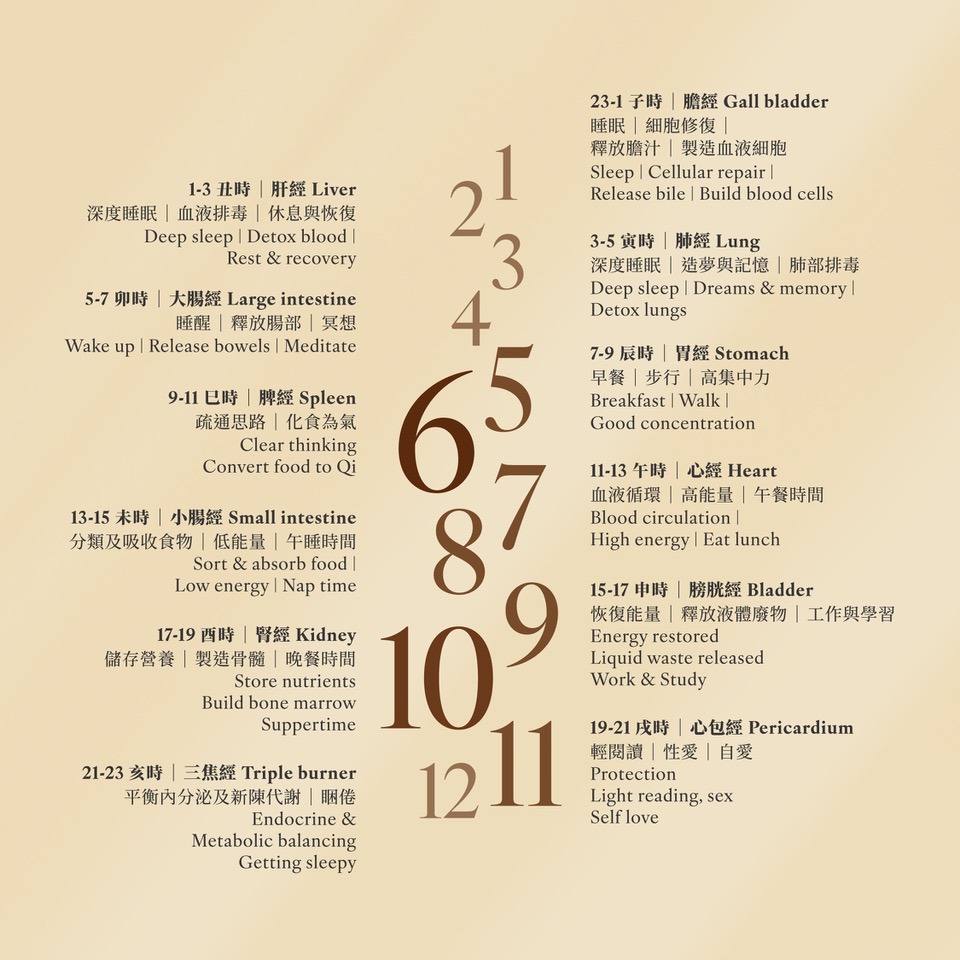
Unlock the secrets & discover the harmony of the 12 Divisions
Explore the ancient wisdom of Traditional Chinese Medicine (TCM) through the lens of the 12 divisions, pathways that guide energy flow in your body.
Discover your Energy Blueprint Learn how each division influences your physical, mental, and emotional well-being, from the Lung’s vitality to the Kidney’s resilience.
Find Balance Understand how imbalances in these divisions can affect your health and discover simple ways to restore harmony.
Embrace the Power of 12 Divisions
Embark on a Journey to Holistic Wellness with Chong Kio Join us on this journey to wellness as we explore the secrets of TCM and empower you to live your best life.
Zi Shi (11 p.m. to 1 a.m.), the Gallbladder Meridian is at its peak.
This period emphasizes the importance of sleeping. Zi Shi is when Yin energy is most abundant, it is the darkest time of the day, and it marks the critical transition point of Yin and Yang energies in the human body. At this time, Yang energy begins to become active, emphasizing the necessity of sleep. Avoiding staying up late is essential to nurture the newly emerging Yang energy.
Chou Shi (1 a.m. to 3 a.m.), the Liver Meridian is most active.
To nurture the liver, it is essential to maintain a calm and peaceful state of mind, avoiding anger and depression, and ensuring that you are already asleep by the Zi Shi. If one does not fall asleep during this division, the blood circulation will continue to be active, which does not allow it to return to the liver for nourishment, potentially harming the liver in the long run. Drinking alcohol during this time can cause significant damage to the liver.
Yin Shi (3 a.m. to 5 a.m.), the Lung Meridian is at its peak.
It is the beginning of the body’s Yang energy and the true start of the day. The twelve meridians in the body begin with the Lung Meridian. At this time, the body’s Qi and blood transition from a state of rest to activity, requiring deep sleep for the lungs to properly distribute Qi and blood to the Small Intestine and Stomach Meridians.
Mao Shi (5 a.m. to 7 a.m.), the Large Intestine Meridian is most active.
This is the optimal time for regular bowel movements to eliminate toxins from the body. After waking up in the morning, drinking a glass of warm water can help facilitate bowel movements. In traditional Chinese medicine, the lungs and large intestine are considered as paired organs; when lung Qi is sufficient, normal bowel movements can occur. It is worth noting that relying on laxatives long-term to treat constipation is not advisable as it can deplete the body’s vital energy and worsen the condition. This is also when the morning breaks, making it ideal for early activities to exercise the body such as practicing qigong, Tai Chi, taking a walk outdoors to breathe fresh air, and avoiding oversleeping or staying in bed lazily.
Chen Shi (7 a.m. to 9 a.m.), the Stomach Meridian is most active.
At this time, the body’s Yang energy is fully activated, making it the most suitable time to have breakfast to replenish nutrients as this is the optimal time for digestion. Breakfast should be simple, adequately portioned, and nutritious to provide the energy needed for morning work.
Yi Shi (9 a.m. to 11 a.m.), the Spleen Meridian is most active.
This period is considered a prime time for work, study, and learning as cognitive abilities are at their peak. The Spleen governs transformation and transportation in the body, particularly in converting the digested food from the stomach into essential nutrients for the body. Therefore, it is advisable to finish breakfast before the Yi Shi starts, as the Spleen function is most vigorous during this time. In Traditional Chinese Medicine, the Spleen is often referred to as the “root of the nurture Qi” and the “source of Qi and Blood transformation.” It plays a crucial role similar to the entire digestive system in modern medicine and is important to refrain from consuming cold foods or beverages during this time to avoid damaging the Spleen.
Wu Shi (11 a.m. to 1 p.m.), the Heart Meridian is most active.
This is considered the optimal time for lunch, as the Heart’s fire helps stimulate the Stomach for better digestion. Additionally, this period marks the peak of Yang energy in the body and serves as a pivotal point in the transformation of Yin and Yang. After this time, Yin energy gradually increases, reaching its peak at midnight. In the context of health preservation, the concept of “afternoon nap” in Traditional Chinese Medicine is emphasized. This refers to the ideal time for rest and sleep, with one cycle occurring around noon and the other around midnight. During these transitions of Yin and Yang, it is beneficial for the body to be in a state of rest. It is recommended to take a short nap during the afternoon, but the duration should not exceed one Shi to avoid disrupting the body’s natural rhythms.
Wei Shi (1 p.m. to 3 p.m.), the Small Intestine Meridian is most active.
The primary function of the Small Intestine is to further digest food that has been partially digested by the Stomach, absorb nutrients, nourish the body through the transformation by the Spleen, and pass the digested remnants to the Large Intestine. Fluids are separated, with water passing through other organs to enter the bladder. The Small Intestine is responsible for the separation of clear and turbid substances and absorption. To take care of the Small Intestine, it is important to have a nutritious lunch. The portion does not necessarily have to be large, but it should definitely be nutrient-dense. The Small Intestine’s function is to absorb nutrients, and the Wei Shi is the optimal time for nutrient absorption. Therefore, it is advisable to finish lunch before the Wei Shi begins, which means completing lunch before 1 p.m.
Shen Shi (3 p.m. to 5 p.m.), the Bladder Meridian is most active.
The Bladder Meridian runs from head to feet, passing through the brain. At this time, the brain’s Qi and blood are abundant, enhancing memory and cognitive functions. It is considered an optimal time for work, learning, and memory-related tasks. The Bladder stores and eliminates fluids, ensuring proper hydration and internal circulation of fluids. It is recommended to drink plenty of water during this time to aid in urination. During the Shen Shi, the body’s Yin and Yang are relatively balanced, Qi and blood flow smoothly, and energy levels are high. It is suitable for outdoor activities and light exercise, and it is beneficial to break a slight sweat during this time.
Xi Shi (5 p.m. to 7 p.m.), the Kidney Meridian is most active.
After the detoxification phase following the Shen Shi, the Xi Shi is a time for storing vitality. It is considered the optimal period for nourishing the Kidneys. When the Kidney Qi is strong, it is believed to support longevity. It is advisable not to overexert or engage in vigorous physical activities during this time. Instead, acupressure on points such as Yongquan (located on the sole of the foot, in the depression before the front one-third of the sole) and Taixi (located on the inside of the foot, behind the inner ankle, in the depression between the tip of the inner ankle and the Achilles tendon) can be beneficial during this time to support Kidney health.
During the Xu Shi (7 p.m. to 9 p.m.), the Pericardium Meridian is most active.
This period enhances the function of the heart once again. The increase in heart fire benefits digestion, so it is advisable to have dinner before 8 p.m. Eating late can affect sleep and burden the stomach and intestines. It is recommended to consume light and easily digestible meals during this time. The Pericardium is the outer membrane of the heart that primarily protects the heart muscle. Due to its proximity to the heart and lungs, it helps in the circulation of Qi and blood between the heart and lungs, harmonizing Yin and Yang. By protecting the heart from external pathogens, the Pericardium plays a role in preventing heart diseases. Symptoms of heart diseases often manifest first in the Pericardium. Furthermore, the Pericardium is associated with the ability to experience joy and happiness. As the Pericardium Meridian governs joy, maintaining a cheerful mood during this time is beneficial for overall well-being.
Hai Shi (9 p.m. to 11 p.m.), the Triple Warmer Meridian is most active.
The Triple Warmer is one of the six Fu organs, located in the cavity between the body and organs, including the chest and abdomen, where the visceral organs are situated. It encompasses the Upper Warmer (including the heart and lungs), Middle Warmer (including the spleen, stomach, liver, and gallbladder), and Lower Warmer (including the kidneys, large intestine, small intestine, and bladder). The Triple Warmer Meridian governs the Qi of the human body, and all Qi pathways lead to the various organs through the Triple Warmer, which communicates with the hundreds of vessels and is crucial for the circulation of Qi and blood in the body. Resting or sleeping during the Hai Shi allows the hundreds of vessels to rest and rejuvenate, which is highly beneficial for the body. This rest period during the Hai Shi helps in balancing and facilitating the flow of Qi and blood in the body, contributing to overall health. Therefore, taking rest during this time is advantageous in Traditional Chinese Medicine practice.
Embark on a journey of holistic wellness with our Brand New herbal tea blends, meticulously crafted to harmonize with the ancient wisdom of the 12 Chinese Traditional Meridians. Inspired by Traditional Chinese Medicine, each tea in our collection is designed to support specific aspects of your well-being, aligning with the unique energy pathways of your body throughout the day.

Morning|Energize Your Day
Chen Shi, Yi Shi|Start your mornings with a sip of vitality as our teas awaken your senses, igniting the flow of energy along your meridians, and empowering you to seize the day ahead.

Afternoon|Nourish Your Body
Wu Shi, Wei Shi, Shen Shi|With ingredients handpicked for their natural healing properties, each cup of our herbal tea is a gentle yet potent elixir, nurturing your body from within and promoting vitality throughout the day.

Night|Restore Inner Harmony
Xi Shi, Xu Shi|Allow the gentle infusion of our herbal blends to realign your body’s energies, fostering a sense of tranquility and serenity amidst life’s demands, guiding you towards a peaceful night’s rest.
Indulge in the ancient wisdom of the 12 Chinese Traditional Meridians and experience the transformative power of our Wellness Herbal Tea Collection. Elevate your well-being one sip at a time, and embark on a journey towards holistic health and vitality.
Brewing Wellness Herbal Tea
1| Place the tea bag inside the teapot
2| Pour 300ml of boiling water into it
3| Cover and simmer for 15 minutes
4| Once the tea bag has steeped, it is ready to be enjoyed
Embark on a Journey to Holistic Wellness with Chong Kio Join us on this journey to wellness as we explore the secrets of TCM and empower you to live your best life.


Related Products
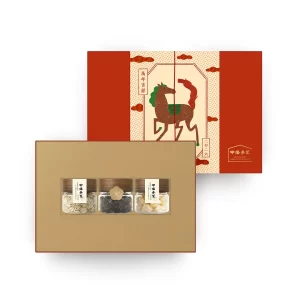
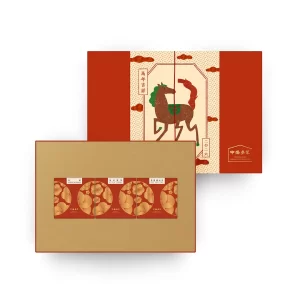
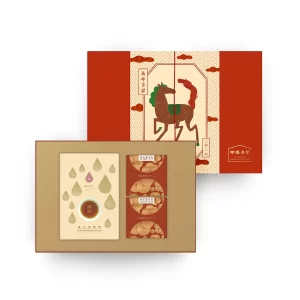
Take Care of Yourself When Life is Busy
At Chong Kio, we believe in nurturing your wellness with nature’s gifts. Experience the harmony of body and mind with Black Ganoderma Lucidum.
More Wellness Knowledge
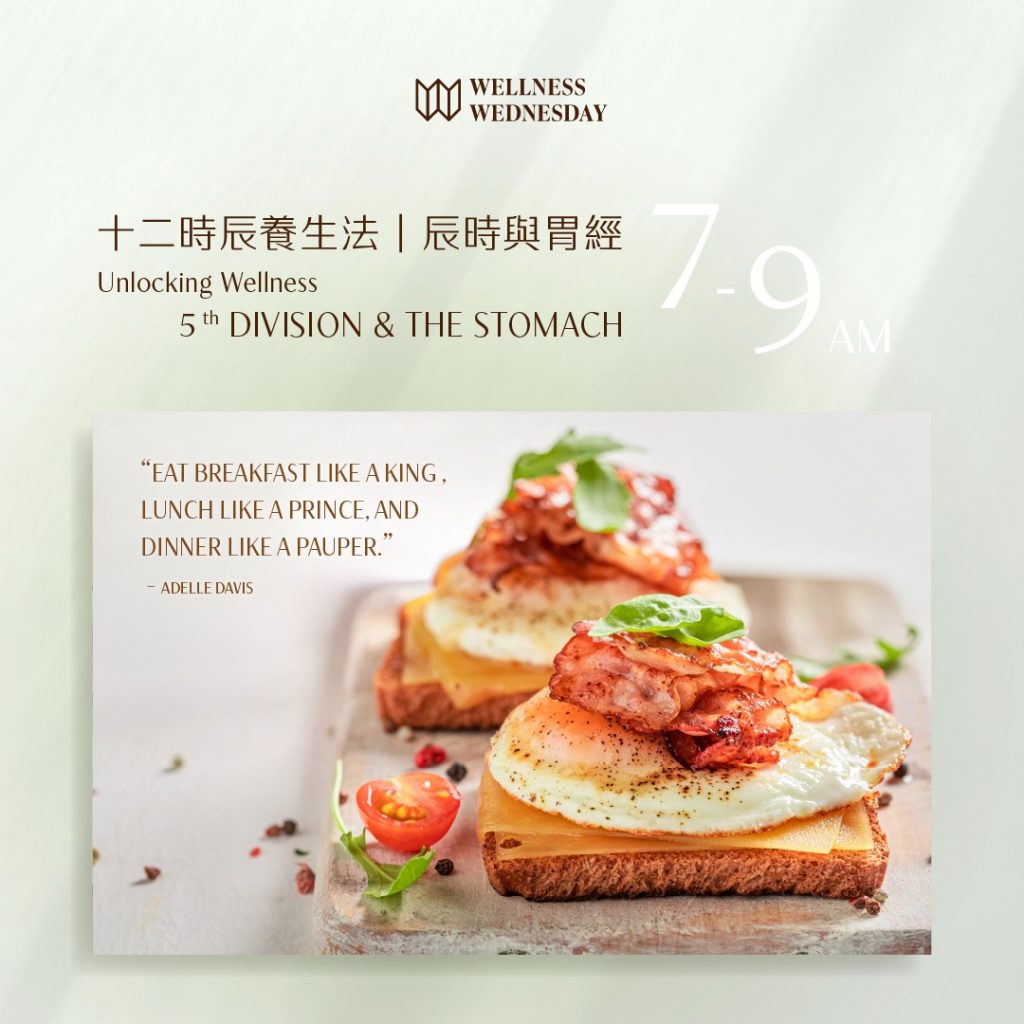
“EAT BREAKFAST LIKE A KING, LUNCH LIKE A PRINCE, AND DINNER LIKE A PAUPER.” – ADELLE DAVIS Did you know that your stomach functions best from 7:00 am to 9:00 am? That’s when your metabolism is at its peak, making breakfast the ideal time to fuel your day! Now let’s learn more about Chen Shi (辰時) – the 5th Division when the stomach meridian is in order and the stomach function is most active. The Stomach Meridian The Stomach Meridian is a long meridian on the front of the human body, running from the head and face, neck, chest, abdomen, […]

“The Spleen governs thought; excessive rumination may impede the digestive functions of the Spleen and Stomach.(脾在志為思,思則氣結)” – “Huangdi Neijing(黃帝內經)” When working or studying during the day, do you often feel drowsy and lacking in energy? You don’t need to rely on caffeine to perk up; simply follow the traditional Chinese medicine (TCM) concept of “harmonizing with the four seasons(順應四時)” for health preservation. By aligning your health practices with the time of day, regulating your body’s internal clock and maintaining organ health, you will naturally feel energetic in the morning, ready to handle each day’s challenges with full vitality. Let’s now […]
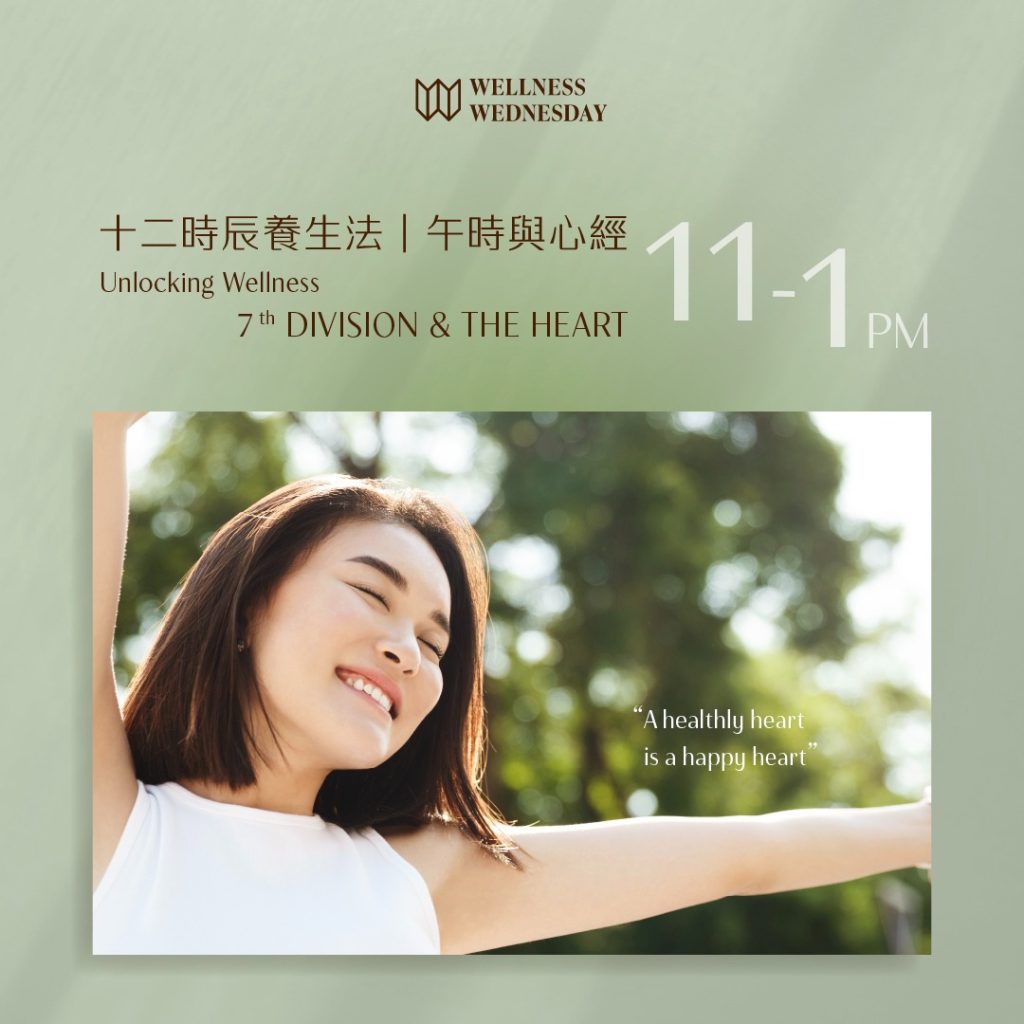
A Happy Heart Is a Healthy Heart Did you know why laughing is good for your heart? It increases blood flow by up to 20% helping to improve vascular function. As the saying goes, “Laughter is the best medicine.” Traditional Chinese medicine believes that avoiding excessive emotional fluctuations and maintaining a calm and joyful mindset are fundamental to health. In today’s fast-paced life, it’s beneficial to laugh often to regulate oneself and achieve the benefits of nurturing the heart. The Heart & The Heart Meridian From 11 AM -1 PM, Wu Shi (午時) – the 7th Division, this is the golden […]